SEO vs LLM Optimization
How Ranking Differs from AI Citation
The digital marketing playbook is shifting as AI assistants change how people find information online. While SEO has long focused on ranking pages in search results, a new layer of visibility is emerging—one where being cited by AI systems matters just as much as being ranked.
Research shows AI platforms cite content that is 25.7% fresher than traditional Google results, highlighting a clear shift in how information is selected and surfaced.
Key Takeaways
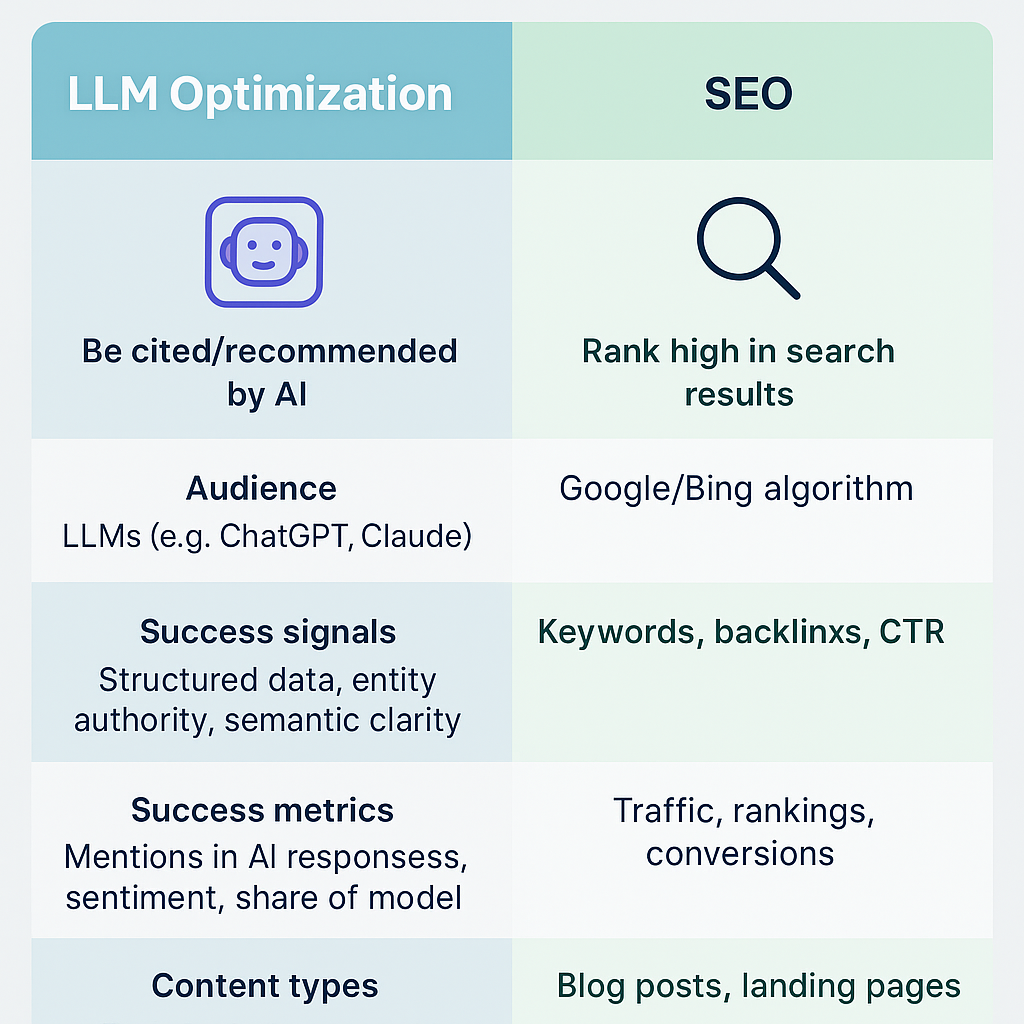
- SEO targets rankings in search results, while LLM optimization focuses on AI citations and brand mentions
- Success metrics differ: rankings and traffic vs AI mentions and zero-click visibility
- Content strategy shifts from keyword targeting to clear, answer-ready information
- AI platforms prefer fresher content and original insight
- E-E-A-T remains critical across both environments
Ranking vs Citation: A Fundamental Shift
Traditional SEO is built around rankings.
The objective is simple: appear as high as possible in search engine results for target queries. Success depends on outperforming competitors through content, backlinks, and technical optimization.
LLM optimization works differently.
Instead of competing for position, the goal is to become a source AI systems reference, quote, and recommend. When users ask platforms like ChatGPT or AI-enhanced search tools a question, visibility comes from being included in the answer—not clicked afterward.
This changes the objective.
Ranking drives traffic.
Citation drives influence.
Why Success Metrics No Longer Match
1. SEO Measures Position and Traffic
SEO performance is built on measurable signals:
- keyword rankings
- organic traffic
- click-through rates
- conversions
These metrics reflect how well content performs within search results.
2. LLM Optimization Measures Mentions and Recall
LLM optimization introduces a different layer of visibility.
Success is measured by:
- how often AI systems mention your brand
- whether your content is quoted
- how your expertise is represented
This “share of model” becomes a new benchmark. It reflects presence within AI-generated answers rather than search results.
3. Content Performance Is Evaluated Differently
In SEO, performance is tied to engagement:
- time on page
- bounce rate
- keyword rankings
In LLM environments, performance is tied to:
- citation frequency
- clarity of information
- accuracy of representation
Content that is easy to quote and clearly structured is more likely to be referenced.
Content Strategy Is Changing
1. From Keywords to Answer-Ready Content
Traditional SEO focuses on keyword targeting and search intent.
LLM optimization requires content that provides clear, factual answers.
AI systems prioritize information that can be:
- easily understood
- directly quoted
- confidently presented
Ambiguity reduces the chance of citation.
Clarity increases it.
2. Entity Clarity Matters More Than Keywords
SEO relies heavily on keyword placement.
LLMO relies on understanding.
AI systems need to clearly identify:
- who you are
- what you do
- where your authority sits
This shifts the focus from keyword density to topic ownership.
3. Structured Information Improves Visibility
Structured content helps both search engines and AI systems interpret information accurately.
Clear headings, defined sections, and explicit relationships between ideas improve:
- ranking signals
- citation likelihood
The easier your content is to interpret, the more likely it is to be used.
Why AI Prefers Different Content
Fresher Content Has an Advantage
AI platforms show a preference for newer information, citing content that is approximately 25.7% fresher than traditional search results.
While authority still matters, recent content increases the likelihood of being surfaced.
Insight Beats Repetition
AI systems favor content that includes:
- original thinking
- professional experience
- clear perspectives
Content that simply restates common knowledge is less likely to be cited.
This creates an advantage for organizations that contribute real insight rather than summaries.
Formats That Work Across Both Environments
1. Pillar Pages and Topic Clusters
Comprehensive content supported by related articles signals depth.
For SEO, this builds ranking strength.
For LLM optimization, it establishes your brand as a consistent knowledge source.
2. FAQs and Comparison Content
Structured Q&A formats align with how both search engines and AI systems process queries.
Clear answers improve both:
- search visibility
- citation probability
3. Original Research and Expert Analysis
Unique data and expert insight perform well in both environments.
They generate:
- backlinks for SEO
- citations for AI
This combination strengthens overall visibility.
Syndication Expands Both Ranking and Citation Reach
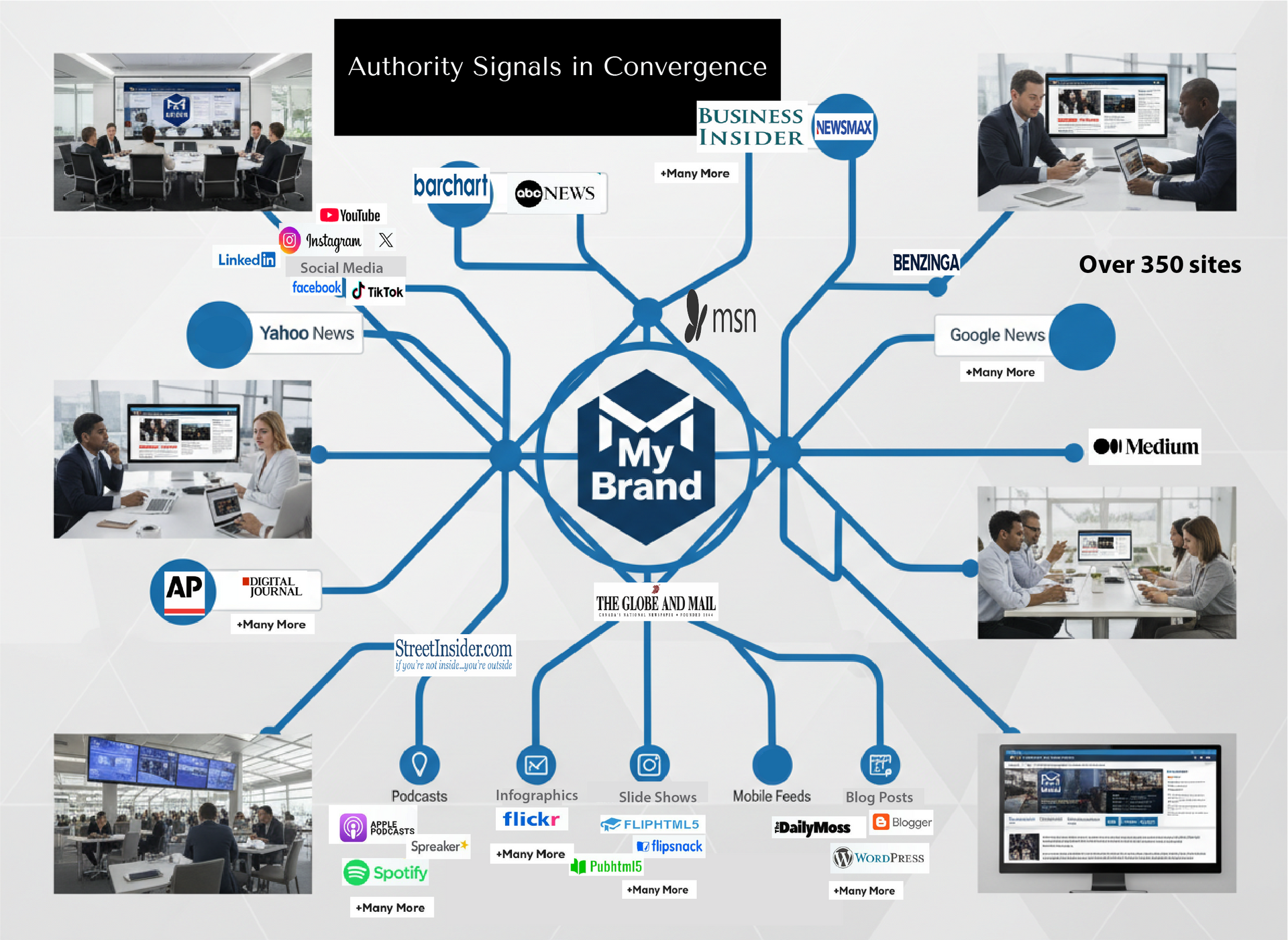
Strategic content syndication strengthens both SEO performance and LLM visibility when executed correctly.
Republishing content on reputable third-party sites builds backlinks and increases brand exposure across trusted domains. This improves search authority while also expanding the environments where AI systems encounter and reference your content.
To maintain SEO value, attribution must be handled properly. Canonical tags should point to the original source, syndication partners should clearly credit your brand, and backlinks should direct users back to your domain.
This approach protects ranking strength while increasing the likelihood of AI citation.
Multi-Format Distribution Increases Citation Opportunities
AI systems increasingly favor content that exists in multiple formats.
Repurposing core ideas into blog posts, videos, infographics, and structured Q&A content creates more opportunities for both search engines and AI systems to interpret and reference your expertise.
Each format should be clearly structured, properly labeled, and connected back to your core content.
This expands your presence across different discovery channels and increases the chances of being surfaced in both search results and AI-generated answers.
E-E-A-T Still Defines What Gets Seen
Experience, expertise, authority, and trust remain critical.
Search engines use these signals to determine rankings.
AI systems use them to decide what to cite.
The criteria may be applied differently, but the principle is the same:
Content must be credible to be visible.
What This Means Going Forward
SEO is not being replaced.
It is being expanded.
Ranking determines whether users can find you.
Citation determines whether AI systems recommend you.
The organizations that win will not choose between the two.
They will build visibility across both.
Citation drives influence—especially when your content appears consistently
across trusted environments.
Ready to see where your authority stands?
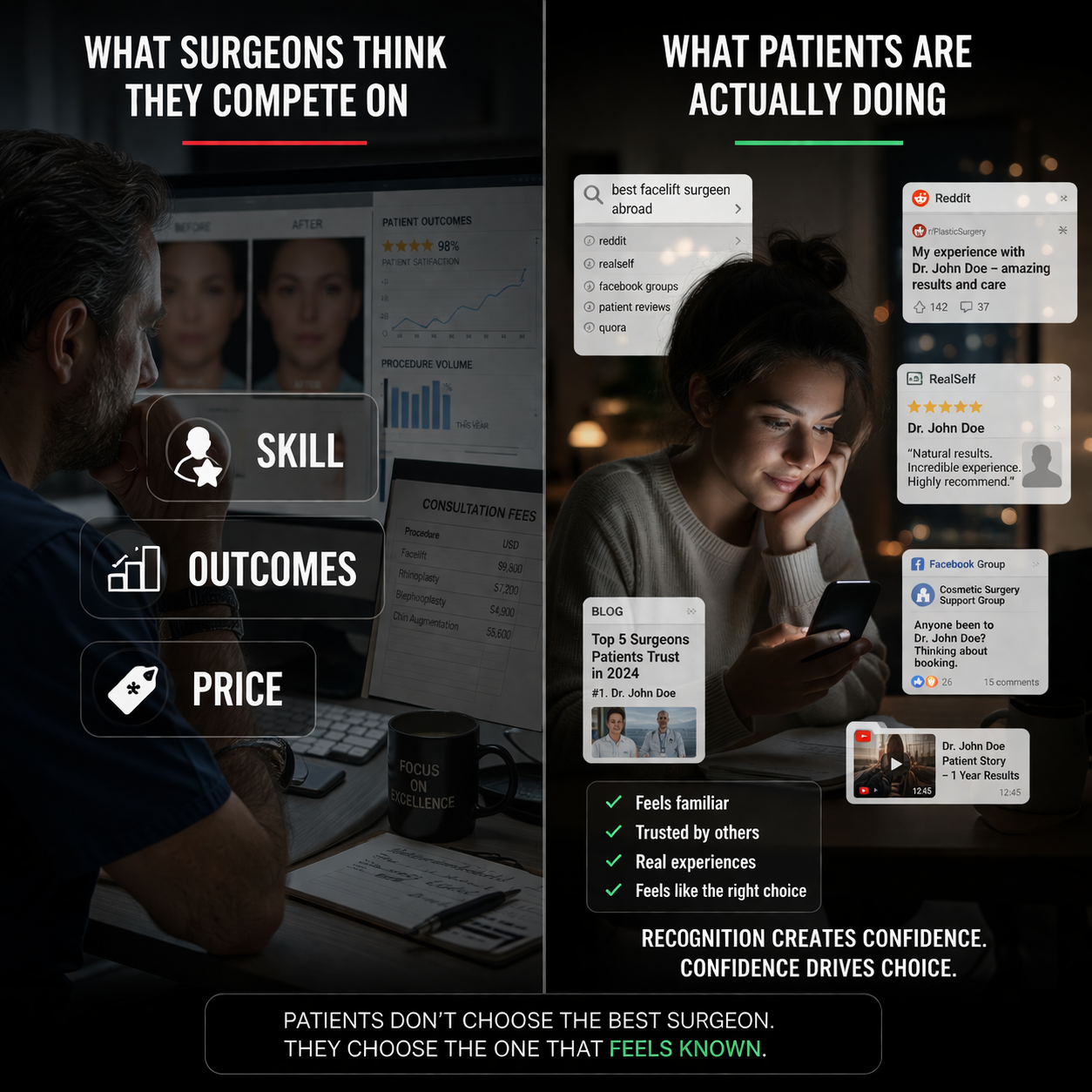
Your name can be visible and still fail to create trust before comparison begins.
If you want to understand how your current authority signals are working, start here.
Request an Authority Compatibility Audit below
Request an Authority Compatibility Audit
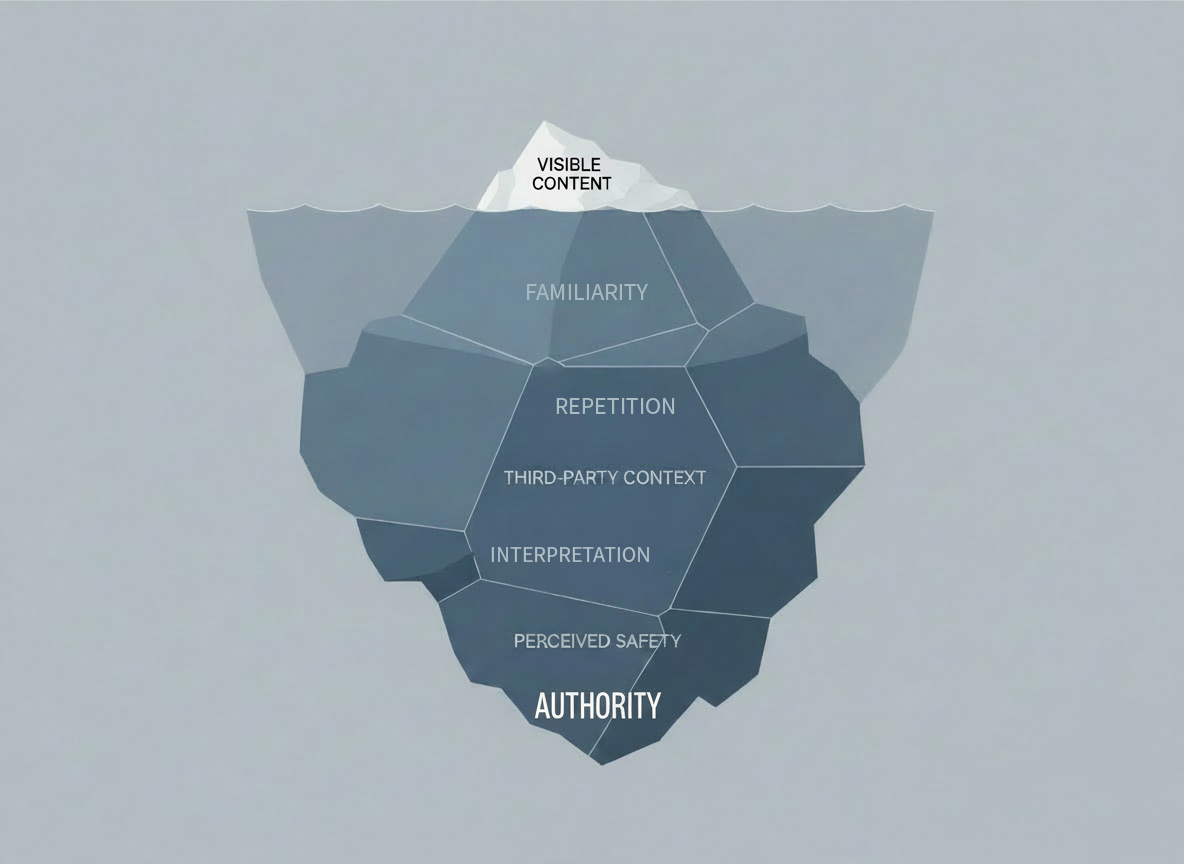
Most decisions are made before outreach. Explore how authority, repetition, and context shape trust long before buyers compare options in our Digital World.
Digital World